Buy pepic.eu ?
We are moving the project
pepic.eu .
Are you interested in purchasing the domain
pepic.eu ?
domain@kv-gmbh.de · 0541-91531010
Buy pepic.eu ?
What does catalyze mean?
Catalyze means to accelerate or facilitate a chemical reaction by participating in the reaction without being consumed. In a broader sense, it can also refer to the process of speeding up or triggering a particular change or development. Catalysis is a fundamental concept in chemistry and biology, where catalysts play a crucial role in increasing the rate of reactions. **
Do some enzymes require cofactors to catalyze?
Yes, some enzymes require cofactors to catalyze chemical reactions. Cofactors are non-protein molecules that bind to the active site of an enzyme and are necessary for the enzyme to function properly. These cofactors can be inorganic ions, such as zinc or magnesium, or organic molecules, such as vitamins or coenzymes. Without the presence of these cofactors, the enzyme may not be able to catalyze the reaction effectively. **


Similar search terms for Catalyze
Top-Angebote
Products related to Catalyze:
-
Chicco Lullaby Playard with Electronics in IcebergQuilted mattress is thickly padded for babys nap time or playtime comfort ; Removable mattress covering is easy to machine wash ; Changing table is elevated for ease of use and thickly padded for babys comfort ; Quilted bassinet is perfect for...159,99 $*Shipping: 0,00 $Secure redirect to the provider
-
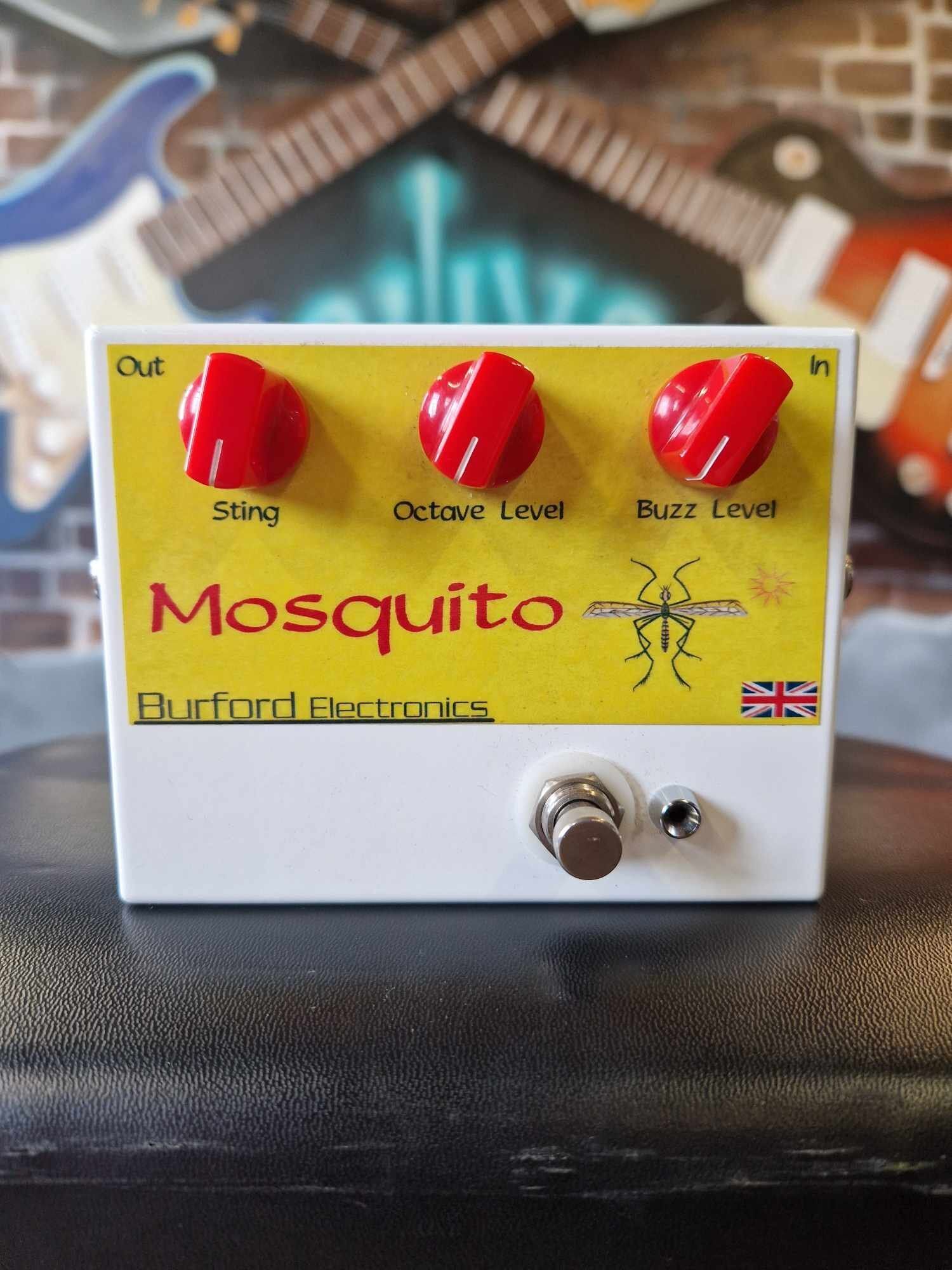
Burford Electronics Mosquito Fuzz Pedal Original - RefurbishedThis is a Burford Electronics Mosquito Fuzz Pedal. The Mosquito is a Fuzz/Octave pedal with a pretty unique sound, being closer to a fuzz more than a distortion this pedal delivers high octane fuzz sounds that will leave a sting. Here's what Burford Electronics say about the Mosquito Pedal: “A unique Octave up fuzz, which will give you pure fuzz on one twist of a knob & octave fuzz on one twist of another knob. So you can have your fuzz setting for a rich body & add octave fuzz to it or turn the fuzz down & just use the octave fuzz control for cutting lead. There is also a control called Sting, this is a tone filter that alters the voice of the octave from sharp to mellow. The octave is not over the top, on the lower register it is quite subtle, you can even play power chords and it holds together extremely well. Without that horrible modulation that is associated with some analogue octave up pedals, even some of the legendary expensive ones. Try soloing somewhere from the 8th fret upwards, it is very responsive and particularly so around 12th/15th fret and even higher. Neck and back pick ups give different sounds. Even playing positions will give different responses.”120,00 £*Shipping: 0,00 £Secure redirect to the provider
-
Keeley Electronics Aurora Digital Reverb Pedal Original - RefurbishedThis is a Keeley Electronics Aurora Reverb guitar effects pedal. Made in the USA, this pedal offers as many different reverb sounds in one pedal as Keeley could manage. As well as having three different reverb styles you get huge control of the Decay, Slapback, warmth and blend meaning you have access to the most inspiring reverb from pristine, fast reflection to ethereal spaces to deep, dark and endless caverns. Here’s what Keeley say about the Aurora; The Keeley Aurora Reverb provides the essentials guitarists are looking for when they need reverb on their pedal boards. Like that ethereal glow to the mighty Earth herself, Aurora creates a natural halo of sound in the atmosphere of your magnificent core tone.100,00 £*Shipping: 0,00 £Secure redirect to the provider



-
Is it possible for enzymes to catalyze endergonic reactions that do not occur spontaneously, or can they only catalyze biochemical processes that are exergonic?
Enzymes can catalyze both endergonic and exergonic reactions. While enzymes typically catalyze exergonic reactions, they can also lower the activation energy barrier for endergonic reactions, allowing them to occur more readily. This is achieved by coupling the endergonic reaction with an exergonic reaction, such as the hydrolysis of ATP, to provide the necessary energy for the endergonic process to proceed. **
-
Is it possible for enzymes to also catalyze endergonic reactions that do not occur spontaneously, or can they only catalyze biochemical processes that are exergonic?
Enzymes can catalyze both endergonic and exergonic reactions. While enzymes typically catalyze exergonic reactions that release energy, they can also facilitate endergonic reactions by lowering the activation energy required for the reaction to occur. This allows endergonic reactions to proceed more readily, even though they may not occur spontaneously without the enzyme's assistance. Overall, enzymes play a crucial role in catalyzing a wide range of biochemical processes, both exergonic and endergonic. **
-
Why do allosteric enzymes catalyze the slowest or the first step of a metabolic pathway?
Allosteric enzymes are often involved in regulating metabolic pathways by controlling the rate of the pathway. By catalyzing the slowest or the first step of the pathway, allosteric enzymes can exert greater control over the overall rate of the pathway. This allows for fine-tuning of metabolic processes in response to changing cellular conditions or signals. Additionally, catalyzing the slowest or first step ensures that the enzyme can effectively regulate the flux of metabolites through the pathway. **
-
Why do allosteric enzymes specifically catalyze the first or slowest step of a metabolic pathway in biology?
Allosteric enzymes specifically catalyze the first or slowest step of a metabolic pathway in biology because they are able to regulate the overall rate of the pathway. By controlling the initial step, allosteric enzymes can effectively regulate the entire pathway's activity. This allows the cell to respond to changes in its environment and maintain homeostasis. Additionally, by targeting the first or slowest step, allosteric enzymes can efficiently control the flux of metabolites through the pathway, ensuring that resources are used effectively. **

Can you provide evidence with Figure 2 that enzymes are adapted to the pH of the environment in which they catalyze reactions?
Yes, Figure 2 shows the activity of two enzymes, enzyme A and enzyme B, at different pH levels. Enzyme A shows maximum activity at a pH of 7, which is neutral, indicating that it is adapted to function optimally in a neutral environment. On the other hand, enzyme B shows maximum activity at a pH of 4, which is acidic, suggesting that it is adapted to function best in an acidic environment. This evidence demonstrates that enzymes are indeed adapted to the pH of the environment in which they catalyze reactions. **
Can you use Figure 2 to demonstrate that enzymes are adapted to the pH of the environment in which they catalyze reactions?
Yes, Figure 2 can be used to demonstrate that enzymes are adapted to the pH of their environment. The figure shows the effect of pH on the activity of two different enzymes. Enzyme A is most active at a pH of 7, which is close to the neutral pH of the environment in which it functions. Enzyme B, on the other hand, is most active at a pH of 4, which is closer to the acidic pH of its environment. This demonstrates that enzymes have evolved to be most active at the pH of their specific environment, showing their adaptation to the pH conditions in which they catalyze reactions. **
Top-Angebote
Products related to Catalyze:
-
Shoekeeper Men's Shoe Stretcher & Spray - M Other Footwear Accessories*Expand your shoes to the perfect fit *Shoe stretch spray softens leather *Screw-driven shoe stretcher expands leather to eliminate pinching *Metal plugs included for spot stretching *Kit includes one stretcher and one bottle of 4 oz. spray *Sizes:...54,95 $*Shipping: 6,95 $Secure redirect to the provider
-
Georgia Boot Comfort Core 5 Orthotic Footbed - M Orange Footwear Accessories*Ergonomic Arch Support in the Georgia Boot Comfort Core 5 Footbed relieves foot fatigue and provides added comfort *Air flow channels provide cool circulation *Footbed can be trimmed *M fits U.S. Men's sizes 6 to 8-1/2 and Women's sizes 8 to 10-1/2...28,00 $*Shipping: 6,95 $Secure redirect to the provider
-
Chicco Lullaby Playard with Electronics in IcebergQuilted mattress is thickly padded for babys nap time or playtime comfort ; Removable mattress covering is easy to machine wash ; Changing table is elevated for ease of use and thickly padded for babys comfort ; Quilted bassinet is perfect for...159,99 $*Shipping: 0,00 $Secure redirect to the provider
-
What does catalyze mean?
Catalyze means to accelerate or facilitate a chemical reaction by participating in the reaction without being consumed. In a broader sense, it can also refer to the process of speeding up or triggering a particular change or development. Catalysis is a fundamental concept in chemistry and biology, where catalysts play a crucial role in increasing the rate of reactions. **
-
Do some enzymes require cofactors to catalyze?
Yes, some enzymes require cofactors to catalyze chemical reactions. Cofactors are non-protein molecules that bind to the active site of an enzyme and are necessary for the enzyme to function properly. These cofactors can be inorganic ions, such as zinc or magnesium, or organic molecules, such as vitamins or coenzymes. Without the presence of these cofactors, the enzyme may not be able to catalyze the reaction effectively. **
-
Is it possible for enzymes to catalyze endergonic reactions that do not occur spontaneously, or can they only catalyze biochemical processes that are exergonic?
Enzymes can catalyze both endergonic and exergonic reactions. While enzymes typically catalyze exergonic reactions, they can also lower the activation energy barrier for endergonic reactions, allowing them to occur more readily. This is achieved by coupling the endergonic reaction with an exergonic reaction, such as the hydrolysis of ATP, to provide the necessary energy for the endergonic process to proceed. **
-
Is it possible for enzymes to also catalyze endergonic reactions that do not occur spontaneously, or can they only catalyze biochemical processes that are exergonic?
Enzymes can catalyze both endergonic and exergonic reactions. While enzymes typically catalyze exergonic reactions that release energy, they can also facilitate endergonic reactions by lowering the activation energy required for the reaction to occur. This allows endergonic reactions to proceed more readily, even though they may not occur spontaneously without the enzyme's assistance. Overall, enzymes play a crucial role in catalyzing a wide range of biochemical processes, both exergonic and endergonic. **
Similar search terms for Catalyze
-
Burford Electronics Mosquito Fuzz Pedal Original - RefurbishedThis is a Burford Electronics Mosquito Fuzz Pedal. The Mosquito is a Fuzz/Octave pedal with a pretty unique sound, being closer to a fuzz more than a distortion this pedal delivers high octane fuzz sounds that will leave a sting. Here's what Burford Electronics say about the Mosquito Pedal: “A unique Octave up fuzz, which will give you pure fuzz on one twist of a knob & octave fuzz on one twist of another knob. So you can have your fuzz setting for a rich body & add octave fuzz to it or turn the fuzz down & just use the octave fuzz control for cutting lead. There is also a control called Sting, this is a tone filter that alters the voice of the octave from sharp to mellow. The octave is not over the top, on the lower register it is quite subtle, you can even play power chords and it holds together extremely well. Without that horrible modulation that is associated with some analogue octave up pedals, even some of the legendary expensive ones. Try soloing somewhere from the 8th fret upwards, it is very responsive and particularly so around 12th/15th fret and even higher. Neck and back pick ups give different sounds. Even playing positions will give different responses.”120,00 £*Shipping: 0,00 £Secure redirect to the provider
-
Keeley Electronics Aurora Digital Reverb Pedal Original - RefurbishedThis is a Keeley Electronics Aurora Reverb guitar effects pedal. Made in the USA, this pedal offers as many different reverb sounds in one pedal as Keeley could manage. As well as having three different reverb styles you get huge control of the Decay, Slapback, warmth and blend meaning you have access to the most inspiring reverb from pristine, fast reflection to ethereal spaces to deep, dark and endless caverns. Here’s what Keeley say about the Aurora; The Keeley Aurora Reverb provides the essentials guitarists are looking for when they need reverb on their pedal boards. Like that ethereal glow to the mighty Earth herself, Aurora creates a natural halo of sound in the atmosphere of your magnificent core tone.100,00 £*Shipping: 0,00 £Secure redirect to the provider
-
Inspire Daily Merch Wooden Flower Buttons Hole Flat Back Buttons For Womens Sweaters Overcoats Apparel Accessories brown 12mmEnhance Your Apparel with 10PCS Wooden Flower Buttons Add a touch of charm to your wardrobe with these 10PCS Wooden Flower Buttons. Designed with a 2hole flatback structure, these beautiful buttons are the perfect addition to your sweaters,...49,97 $*Shipping: 0,00 $Secure redirect to the provider
-
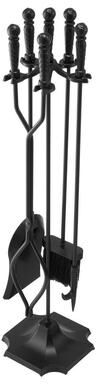
Tools, Home & Hobby Fireplace Tool Set 5 Piece Wrought Iron Fireplace Accessories Stand For Indoor & Outdoor Fires Fireplace Tool Set 5 Piece Wrought Iron Fireplace Accessories Stand For Indoor & Outdoor FiresWarm evenings deserve tools you can rely on. This Fireplace Tool Set is designed to help you safely tend fires, keep your hearth clean, and add timeless style to your living space. Crafted from durable wrought iron and carbon steel, it's ideal for...129,97 $*Shipping: 0,00 $Secure redirect to the provider
-
Why do allosteric enzymes catalyze the slowest or the first step of a metabolic pathway?
Allosteric enzymes are often involved in regulating metabolic pathways by controlling the rate of the pathway. By catalyzing the slowest or the first step of the pathway, allosteric enzymes can exert greater control over the overall rate of the pathway. This allows for fine-tuning of metabolic processes in response to changing cellular conditions or signals. Additionally, catalyzing the slowest or first step ensures that the enzyme can effectively regulate the flux of metabolites through the pathway. **
-
Why do allosteric enzymes specifically catalyze the first or slowest step of a metabolic pathway in biology?
Allosteric enzymes specifically catalyze the first or slowest step of a metabolic pathway in biology because they are able to regulate the overall rate of the pathway. By controlling the initial step, allosteric enzymes can effectively regulate the entire pathway's activity. This allows the cell to respond to changes in its environment and maintain homeostasis. Additionally, by targeting the first or slowest step, allosteric enzymes can efficiently control the flux of metabolites through the pathway, ensuring that resources are used effectively. **
-
Can you provide evidence with Figure 2 that enzymes are adapted to the pH of the environment in which they catalyze reactions?
Yes, Figure 2 shows the activity of two enzymes, enzyme A and enzyme B, at different pH levels. Enzyme A shows maximum activity at a pH of 7, which is neutral, indicating that it is adapted to function optimally in a neutral environment. On the other hand, enzyme B shows maximum activity at a pH of 4, which is acidic, suggesting that it is adapted to function best in an acidic environment. This evidence demonstrates that enzymes are indeed adapted to the pH of the environment in which they catalyze reactions. **
-
Can you use Figure 2 to demonstrate that enzymes are adapted to the pH of the environment in which they catalyze reactions?
Yes, Figure 2 can be used to demonstrate that enzymes are adapted to the pH of their environment. The figure shows the effect of pH on the activity of two different enzymes. Enzyme A is most active at a pH of 7, which is close to the neutral pH of the environment in which it functions. Enzyme B, on the other hand, is most active at a pH of 4, which is closer to the acidic pH of its environment. This demonstrates that enzymes have evolved to be most active at the pH of their specific environment, showing their adaptation to the pH conditions in which they catalyze reactions. **
* All prices are inclusive of VAT and, if applicable, plus shipping costs. The offer information is based on the details provided by the respective shop and is updated through automated processes. Real-time updates do not occur, so deviations can occur in individual cases. ** Note: Parts of this content were created by AI.